
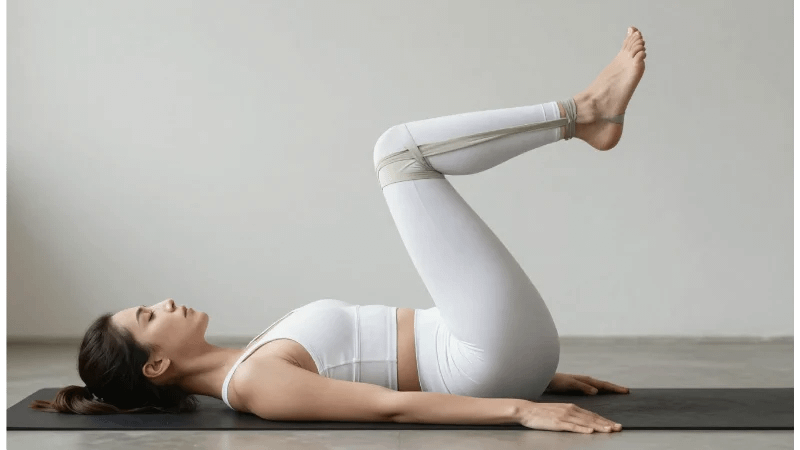
Introduction: Why Home Warriors Need Core Training
Your core muscles work constantly throughout every single day—whether you realize it or not. Moreover, weak abs lead to poor posture, chronic back pain, and reduced athletic performance. However, building a strong core doesn’t require expensive gym memberships or fancy equipment. Consequently, home-based training has become increasingly popular for busy individuals seeking fitness solutions. Best rubber band exercises for abs provide an accessible path to core strength anywhere. Furthermore, your core stabilizes your entire body during virtually every movement you make. Additionally, strong abdominal muscles improve balance, prevent injuries, and enhance overall functional fitness. Research shows that people with stronger cores experience fewer workplace injuries and better quality of life. Therefore, prioritizing core training creates benefits that extend far beyond just aesthetic improvements. Whether you’re lifting groceries, playing with kids, or sitting at a desk all day, your abs are constantly engaged. Thus, strengthening them becomes essential for long-term health and daily performance optimization.
Understanding Resistance Band Core Training
Resistance bands create constant tension that traditional floor exercises simply can’t match. Consequently, your abdominal muscles work harder throughout the entire range of motion. The core stabilization benefits of resistance training extend beyond just building visible abs. Moreover, bands allow progressive overload without purchasing multiple weight plates or machines. Best rubber band exercises for abs engage deep core muscles that protect your spine. Furthermore, resistance bands are incredibly affordable compared to traditional gym equipment options. Research shows that core strength improves posture, reduces back pain, and enhances athletic performance. Therefore, incorporating bands into your routine creates comprehensive functional fitness improvements. Beyond aesthetics, strong abs support virtually every movement pattern in daily life.
Exercise #1: Resistance Band Standing Oblique Crunches
The Setup and Proper Form
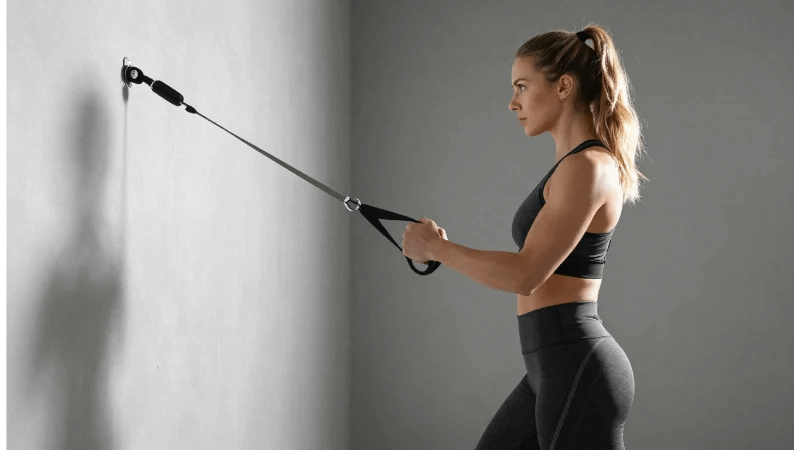
First up—this absolute banger targets your obliques and entire core brilliantly. Here’s how to execute best rubber band exercises for abs for obliques properly:
Step-by-Step Instructions:
- Anchor your resistance band to a sturdy point at chest height
- Stand perpendicular to the anchor point with feet shoulder-width apart
- Grab the handle with both hands and step away for tension
- Extend your arms straight out at chest level
- Keep your hips and lower body completely stationary throughout
- Pull the band diagonally downward across your body while exhaling
- Crunch your obliques hard bringing hands toward opposite hip
- Control the return to starting position while inhaling
- Complete 15-20 repetitions on one side
- Switch positions and repeat on the opposite side
- Perform 3 sets per side with 45 seconds rest
- Focus on core engagement rather than arm pulling
Understanding Oblique Crunch Mechanics
Standing oblique crunches specifically target the muscles responsible for rotation and lateral flexion. Moreover, your internal and external obliques work together during this diagonal movement pattern. Additionally, this exercise builds functional strength for everyday twisting and reaching movements. The standing position engages stabilizer muscles throughout your legs and lower back simultaneously. Consequently, you’re building total-body strength while focusing on your midsection effectively. Furthermore, constant band tension prevents momentum from taking over like traditional crunches allow.
Common Standing Oblique Variations
Alternative Positions and Grips:
- Kneeling Oblique Crunch – Kneel on one knee for increased stability
- High-to-Low Cable Woodchop – Anchor band high and pull diagonally downward
- Low-to-High Rotation – Anchor band low and rotate upward across body
- Single-Arm Variation – Use one hand for asymmetrical core challenge
Home exercisers benefit from rotating these variations to prevent workout boredom. Moreover, different angles stimulate oblique fibers from various positions for complete development. Additionally, alternating grips and positions keeps your core guessing and adapting constantly.
Troubleshooting Form Issues
Many people use their arms instead of their core—here’s how to fix it. Consequently, imagine your arms are just ropes connecting your torso to the band. Moreover, if you feel bicep fatigue before core burn, you’re pulling incorrectly. Additionally, rotating your hips defeats the purpose of isolated oblique engagement completely. Furthermore, rushing repetitions reduces time under tension and diminishes results significantly. Therefore, slow down and focus on quality muscle contractions over quantity.
Exercise #2: Resistance Band Reverse Crunches
Executing Perfect Reverse Crunches
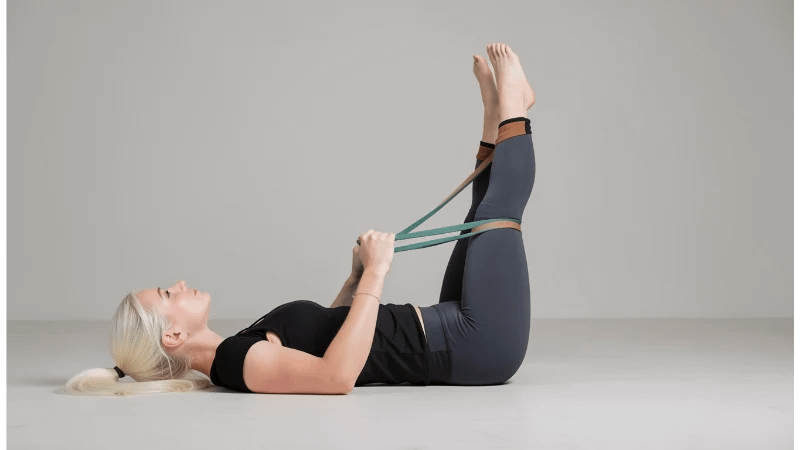
Now let’s hammer your lower abs—the area most people struggle with desperately. Here’s your complete guide to performing best rubber band exercises for abs for lower abdominals:
Step-by-Step Instructions:
- Anchor your resistance band to a sturdy low point behind you
- Lie flat on your back with head toward the anchor point
- Loop the band around both feet securely
- Bend your knees at a 90-degree angle to start
- Place your hands flat on the floor beside your hips
- Engage your core by drawing belly button toward spine
- Pull your knees toward your chest while lifting hips slightly
- Squeeze your lower abs hard at the top position
- Slowly lower back to starting position with complete control
- Complete 15-20 repetitions for one challenging set
- Rest for 45-60 seconds between sets
- Perform 3 sets total maintaining perfect form throughout
Understanding Reverse Crunch Mechanics
Reverse crunches specifically target the lower portion of your rectus abdominis muscle. Moreover, adding resistance band tension increases difficulty significantly compared to bodyweight versions. Additionally, this exercise addresses the common weakness in hip flexor control many people experience. The band creates progressive resistance as you curl your hips upward. Consequently, your abs work harder at the peak contraction point where muscles need it most. Furthermore, reverse crunches protect your lower back better than traditional forward crunches do.
Common Reverse Crunch Variations
Progressive Difficulty Options:
- Single-Leg Reverse Crunch – Work one leg at a time for isolation
- Extended Leg Version – Straighten legs for increased leverage and difficulty
- Pulse Repetitions – Add small pulses at top position for intensity
- Slow Eccentric Focus – Take 5 seconds lowering for time under tension
Best rubber band exercises for abs become more effective when you progressively challenge yourself. Moreover, these variations prevent adaptation and keep results coming consistently over months. Additionally, mixing variations weekly maintains mental engagement and prevents boring workout routines.
Troubleshooting Form Issues
Most people swing their legs using momentum instead of controlled muscle contraction. Consequently, you should feel your lower abs burning rather than hip flexors straining. Moreover, if your lower back arches excessively, reduce band tension immediately. Additionally, neck tension indicates you’re lifting your head unnecessarily during the movement. Furthermore, keeping movements slow and controlled ensures maximum muscle fiber recruitment. Therefore, prioritize perfect form over completing more repetitions with poor technique.
Creating Your Home Ab Workout Routine
Consistency beats intensity for building visible abs—that’s the honest truth. Best rubber band exercises for abs work brilliantly when performed three to four times weekly. Moreover, pair these exercises with proper nutrition for maximum fat loss results. Additionally, keep your band easily accessible as a visual workout reminder daily. Furthermore, morning sessions before breakfast work excellently for many home exercisers. Beyond just these two exercises, consider incorporating full-body movements for comprehensive fitness development. Therefore, dedicate 15-20 minutes per session for sustainable long-term adherence and results.
Progressive Overload Strategies:
- Increase band resistance as exercises become easier
- Add more repetitions once you can complete sets comfortably
- Slow down tempo for increased time under tension
- Reduce rest periods between sets for metabolic conditioning
- Combine both exercises into supersets for efficiency
- Add isometric holds at peak contraction points
Frequently Asked Questions
1. How long before I see visible abs from these resistance band exercises?
Visible abs require 8-12 weeks of consistent training combined with proper nutrition. Results vary based on starting body fat percentage.
2. Can resistance bands really build abs effectively at home?
Absolutely—best rubber band exercises for abs provide sufficient resistance for significant core strength development and muscle growth.
3. What resistance level should beginners start with for ab exercises?
Start with light resistance allowing 15-20 controlled repetitions. Medium bands (typically green or blue) work well initially.
4. How many times per week should I do these ab exercises?
Three to four times weekly provides optimal results while allowing adequate recovery. Avoid training abs daily for best outcomes.
5. Can I do these exercises with existing lower back problems?
Consult healthcare professionals before starting. However, these exercises often strengthen core muscles that support spinal health effectively.
6. Should I do cardio alongside these resistance band ab exercises?
Yes—combining resistance training with cardio maximizes fat loss for visible ab definition. Aim for 150 minutes weekly.

